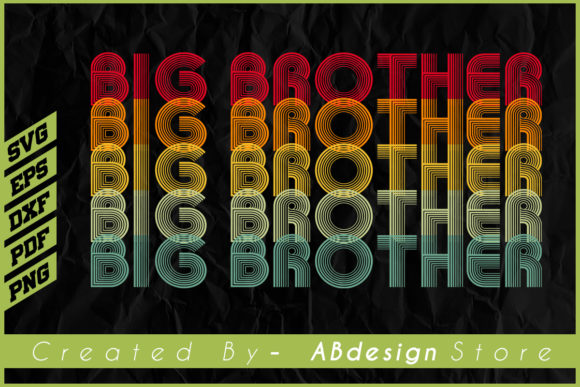
Vintage Retro Big Brother Sublimation
I have spent years reviewing digital assets for embroidery, and I often find myself sifting through thousands of files to find that one gem that actually translates well from a screen to a needle. Today, I am looking at the Vintage Retro Big Brother Sublimation design. On paper, it is listed under Print Templates and Graphics, but my job is to tell you how it behaves when it hits the hoop. This isn't just about the file format; it is about whether this design can survive the rigors of real-world stitching and hold up in a commercial setting.
The first thing that strikes me about Vintage Retro Big Brother Sublimation is its mood. It carries a distinct retro vibe that feels nostalgic yet modern enough for current trends. The layout suggests a bold statement piece, likely perfect for custom apparel or home decor items where you want the viewer to stop and look. When I imagine this design stitched out, I picture a high-contrast aesthetic that works beautifully on neutral backgrounds. It feels like a design meant for someone who appreciates classic typography mixed with a vintage illustration style. However, before you commit to buying this for your next Etsy listing, we need to talk about how it handles actual fabric texture and stitch density.
Real-World Application: The Custom Tote Bag Scenario
Let's walk through a practical scenario. Imagine you are an Etsy seller preparing a batch of tote bags for a summer craft fair. You want to create a line of "Sailing Lovers" merchandise, as hinted at in the product description. You decide to use Vintage Retro Big Brother Sublimation as the centerpiece for these bags. The goal is to create a durable, eye-catching embroidered patch or direct-to-garment print that customers will want to carry around all day.
In this situation, the design needs to be robust. If you are stitching this onto canvas, the heavy-duty nature of the bag material requires a design with sufficient fill stitches to prevent puckering. The Vintage Retro Big Brother Sublimation design must be large enough to stand out against the textured weave of the canvas. If the design is too small, those intricate retro details might get lost in the fabric grain. Conversely, if it is too large, it might overwhelm the limited space on a standard tote handle area. My advice is to visualize the finished product on a 15x18 inch canvas bag. Does the composition balance well? Does the text remain legible once the thread adds volume to the letters?
This specific design seems ideal for projects like sweatshirt embroidery, baby clothes, or even holiday gifts. The retro theme fits perfectly with autumnal colors or nautical palettes. For a baby item, such as a onesie or a nursery pillow cover, the design offers a charming, personalized touch that parents love. However, you must consider the scale. A tiny version of this design on a baby hat might lose its impact, whereas a larger version on a kitchen towel or apron would shine. The key is matching the visual weight of the design to the size of the garment.
Where Caution Is Required
While Vintage Retro Big Brother Sublimation has great potential, there are specific scenarios where you should proceed with caution. Not every surface is suitable for every machine embroidery design. If you are working with small hoop sizes, you might find that the fine details of the retro elements become distorted. Tiny lettering or delicate corners often suffer when compressed into a 4x4 inch hoop. In these cases, the design might look cluttered rather than crisp.
Textured fabrics present another challenge. If you are attempting to stitch this onto a chunky knit sweater or a heavily textured linen, the stabilizer support becomes critical. Without proper backing, the tension of the satin stitch could pull the fabric, ruining the shape of the design. Similarly, stretchy fabrics like jersey or spandex require a very stable setup. If you do not use a cut-away stabilizer, the design might warp after the first wash. Dark fabrics also demand attention; ensure that your thread colors provide enough contrast against the background. A light-colored retro design on a black t-shirt might lack visibility unless you use a dense underlay or a contrasting border.
Curved surfaces, such as caps and hats, add another layer of complexity. While many designs work well on flat panels, applying Vintage Retro Big Brother Sublimation to a curved brim or crown requires careful digitizing adjustments. If the design was not originally optimized for curvature, the perspective might look off, making the text appear warped. Always test the design on a scrap piece of the same fabric before running a full production run.
Technical Considerations for the Designer
As a professional designer, I cannot stress enough the importance of testing before selling. Even though the product description mentions SVG, EPS, PNG, DXF, and PDF files, you must verify the specific stitch count and machine compatibility for your own equipment. Some machines handle high-density fill stitches differently than others. If the design is intended for applique, check the placement lines carefully. If it is a pure embroidery file, review the stitch density to ensure it is not so thick that it causes needle breakage or fabric stiffness.
Thread color selection is paramount for achieving the right vintage feel. A monochromatic scheme might look too stark, while a multi-color palette could bring out the retro charm. I recommend creating a few variations using different thread colors to see which combination best suits your brand identity. Also, inspect the small details closely. Are the edges clean? Do the transitions between fill stitches and running stitches look smooth? These nuances separate a amateur-looking product from a professional-grade finished product.
For those of you selling digital products or finished goods, understanding the licensing terms is essential. Before you list Vintage Retro Big Brother Sublimation on your shop or use it in client projects, confirm whether the license allows for commercial use. Did the purchase include rights to sell the final embroidered items? Or is it strictly for personal use? Clarifying this prevents legal headaches down the road. Additionally, always check the resolution of the printable mockups provided. A 300 DPI PNG is excellent for printing, but ensure it matches the dimensions you need for your specific display requirements.
Final Thoughts on Visual Appeal and Value
Ultimately, the success of Vintage Retro Big Brother Sublimation depends on how well it integrates into your workflow. A strong design elevates the perceived value of your handmade product. Customers trust brands that pay attention to detail, and a well-executed embroidery project signals professionalism. Whether you are creating a boutique branding element, a gift for a sailing enthusiast, or a unique addition to your craft fair booth, this design has the potential to be a standout asset.
Just remember to manage your expectations regarding the limitations of the medium. No digital file is perfect without human oversight. Take the time to test on scrap fabric, adjust the stabilizer, and refine the thread choices. By doing so, you ensure that your finished product reflects the quality and care that defines true craftsmanship. If you approach Vintage Retro Big Brother Sublimation with a critical eye and a willingness to experiment, it can become a staple in your collection of design assets.